

Hi,
Bought this Stahlwille Manoskop torque wrench secondhand for €30, which I thought was a nice deal. I noticed that after torquing a nut, you manually had to push back the head to it's 'pre click' location, before you could start torquing another one. The seller said this was normal for this type wrench, but after a while it wouldn't click in the lower range and only very faint and mushy in the upper range.
So I decided to take it apart to try and repair it. There wasn't a lot of info on these on the internet, and it's an interesting less common mechanism. That's why I probably went overboard with the pictures
The thing about these torque wrenches is that you don't have to set them to zero after you're done. They only put tension on the torsion bar while you're actually tightening. It's a heavy wrench, all metal besides the handle and feels very industrial and reliable. I like it!!
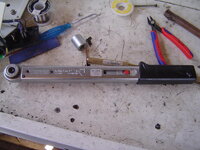

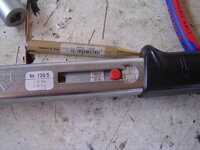
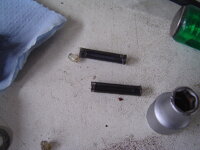
To disassemble it, you press out the two pins in the second picture with a vise and remove the plastic handle by sliding it off. The red button on the slide can be removed revealing a screw


Next by removing the screw and clamping the slider lock, you can take out the slide.

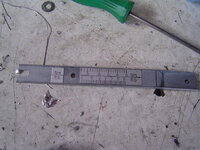
The ratcheting head insert and the receiving part come out the other side, make sure you don't lose the retaining ball.


At that point you can slide out the entire mechanism, leaving the hollow housing.
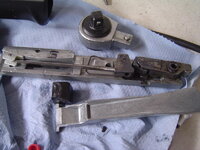


Couple of pictures of the dirty mechanism, I don't know if this is unique for stahlwille torque wrenches?
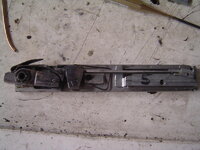

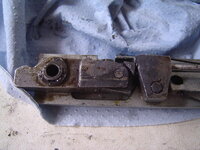
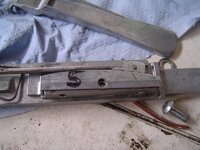
^here you can see the slide that adjusts the fulcrum on the beam + the two calibration screws that can be adjusted without taking the wrench apart through two little holes in the housing with plastic dust plugs in them (I kind of killed those):

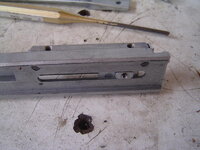
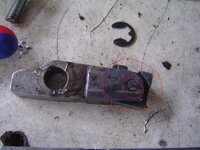
Removing the circlip on the part that actually does the clicky thing revealed the problem. The wrench is in a really good condition and has clearly seen very little use, that's why the grease dried up and caked this part together;
After working it loose, cleaning all the old grease and relubing it with MoS2 and reassembling (twice, I forgot the spring that resets the mechanism). The wrench is a good as new.
I know I should probably get it calibrated, but I'm just too cheap
Also I think that in most cases the even tightening of bolts is more important then the actual perfect torque.
Hope this helps or is at least interesting to somebody!!
Bought this Stahlwille Manoskop torque wrench secondhand for €30, which I thought was a nice deal. I noticed that after torquing a nut, you manually had to push back the head to it's 'pre click' location, before you could start torquing another one. The seller said this was normal for this type wrench, but after a while it wouldn't click in the lower range and only very faint and mushy in the upper range.
So I decided to take it apart to try and repair it. There wasn't a lot of info on these on the internet, and it's an interesting less common mechanism. That's why I probably went overboard with the pictures
The thing about these torque wrenches is that you don't have to set them to zero after you're done. They only put tension on the torsion bar while you're actually tightening. It's a heavy wrench, all metal besides the handle and feels very industrial and reliable. I like it!!
To disassemble it, you press out the two pins in the second picture with a vise and remove the plastic handle by sliding it off. The red button on the slide can be removed revealing a screw
Next by removing the screw and clamping the slider lock, you can take out the slide.
The ratcheting head insert and the receiving part come out the other side, make sure you don't lose the retaining ball.
At that point you can slide out the entire mechanism, leaving the hollow housing.
Couple of pictures of the dirty mechanism, I don't know if this is unique for stahlwille torque wrenches?
^here you can see the slide that adjusts the fulcrum on the beam + the two calibration screws that can be adjusted without taking the wrench apart through two little holes in the housing with plastic dust plugs in them (I kind of killed those
):Removing the circlip on the part that actually does the clicky thing revealed the problem. The wrench is in a really good condition and has clearly seen very little use, that's why the grease dried up and caked this part together;
After working it loose, cleaning all the old grease and relubing it with MoS2 and reassembling (twice, I forgot the spring that resets the mechanism
). The wrench is a good as new. I know I should probably get it calibrated, but I'm just too cheap
Also I think that in most cases the even tightening of bolts is more important then the actual perfect torque.
Hope this helps or is at least interesting to somebody!!
Last edited:


